
In August, the peak of summer’s heat, we propose seeking refuge from the stuffiness in galleries and museums: the Ukrainian House hosts a grand exhibition dedicated to composer Borys Lyatoshynsky, while the “Lavra” gallery showcases delicate tapestries inspired by the works of Oleksandr Sukholit.
“Oleksandr Sukholit. Tapestries”
“Lavra” Gallery, August
Advertisement.
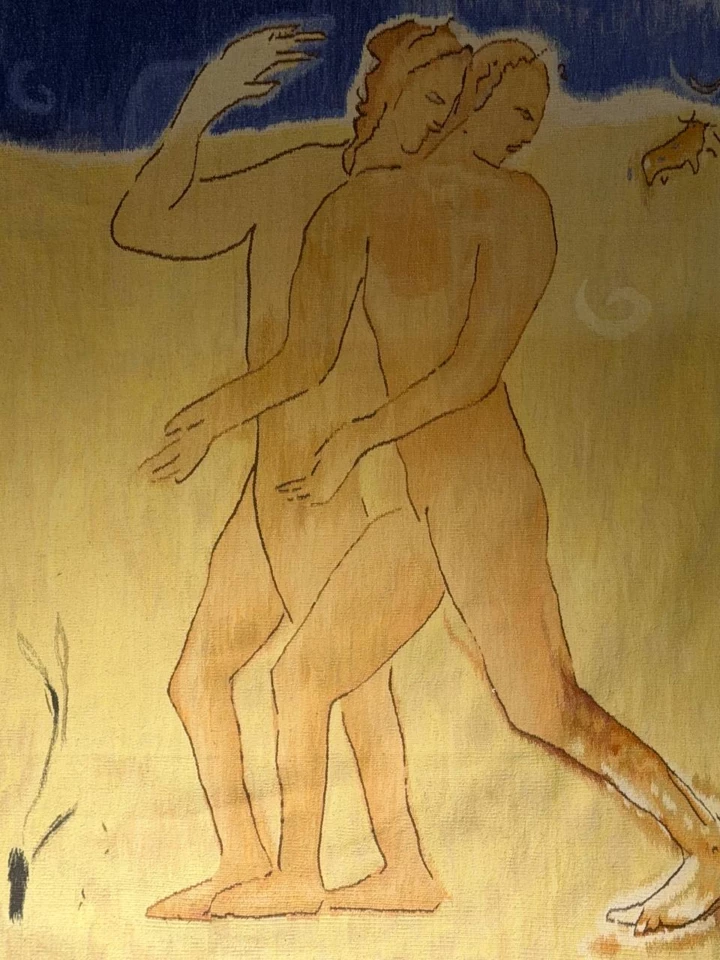
Throughout August, the “Lavra” gallery is presenting an exhibition of tapestries created from the paintings of Oleksandr Sukholit. The expressive works of one of the masters of contemporary Ukrainian art have been transferred to carpets by artisans from the legendary Reshetilivka factory. The tradition of weaving in the village of Reshetilivka in the Poltava region dates back to the 19th century.
The wool and silk tapestries are executed using the traditional hand-weaving technique of Reshetilivka. With warm natural colors, philosophical themes, and masterful craftsmanship, the “Oleksandr Sukholit. Tapestry” exhibition offers a meditative experience, seemingly ideal for unhurried contemplation during the summer.
“Since ancient Greece, tapestries have been considered luxurious, elite works of art,” says curator Tetiana Mironova. “At one time, Raphael and Rubens created designs specifically for tapestries. In the 1950s, billionaire Nelson Rockefeller commissioned Picasso himself to create a tapestry based on ‘Guernica.’ For Oleksandr Sukholit, this project marks a new chapter. By working with tapestries, the artist translates the language of the brush into a completely different language of textured wool threads. And the work is perceived differently.”
“Trace of Touch”
Avangarden Gallery, until September 8
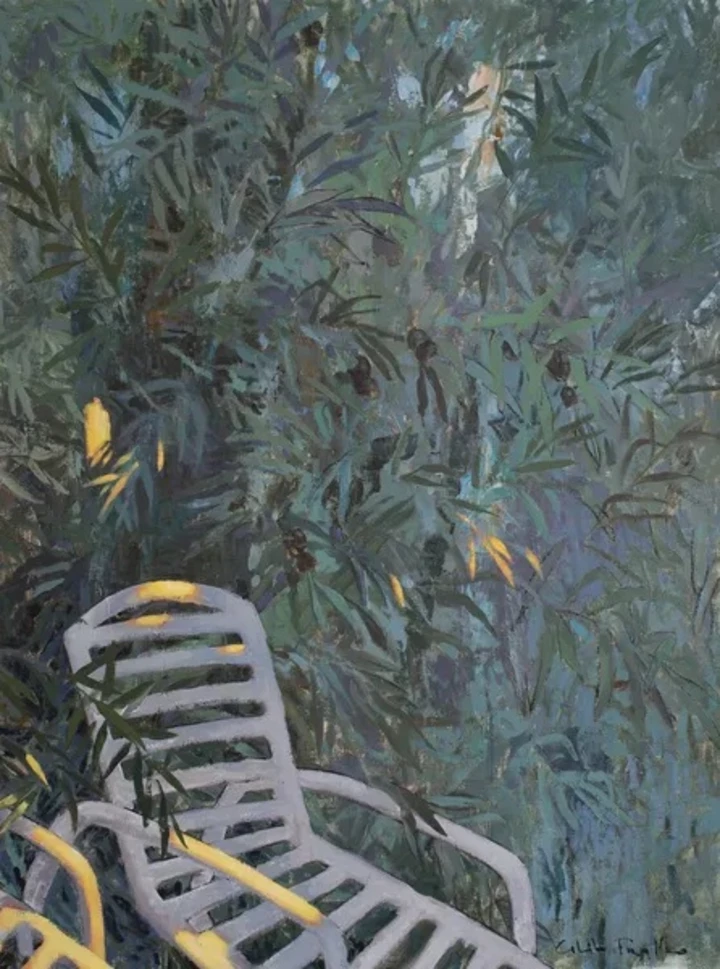
“Trace of Touch” is an exhibition that unites Ukrainian artists and designers whose works exist at the intersection of utilitarian objects and art pieces. Furniture, ceramics, carpets, glass, and paintings create a space where industrial aesthetics, ergonomics, and the material logic of an object are expressed through an artistic language. The objects presented at the exhibition make the trace of the hand visible: the plasticity of glass, the texture of ceramics, the knot of hand weaving, and natural imperfections become the solution. The surface retains the imprint of touch—evidence of time, process, and human presence.
Among the participants are Oksana Levchenia, Iryna Maksymova, Sofiia Horbachevska (Sofika Ceramics), Andriy Saenko, Andriy Opryshko.
“Lyatoshynsky. Reflection”
Ukrainian House, from August 13 to September 20
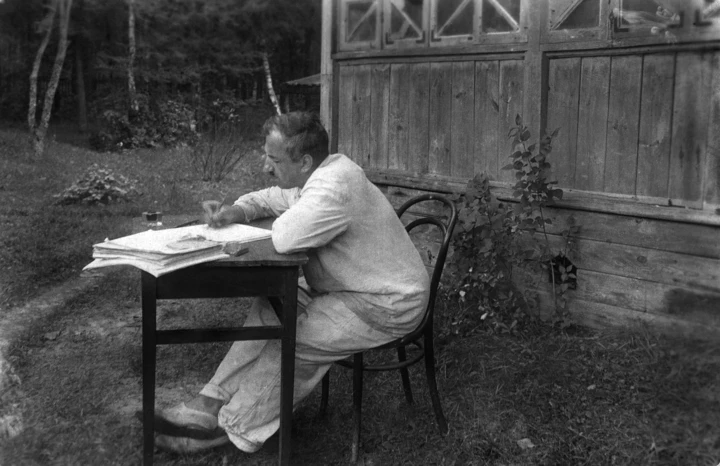
Following exhibitions dedicated to Alla Horska and the Kyiv Sixtiers artists, Maria Prymachenko, the Boychukist female artists, and other prominent figures of 20th-century art, the institution presents its first music exhibition.
The exhibition project “Lyatoshynsky. Reflection” unveils the figure of one of Ukraine’s most distinguished composers and, for the first time, extensively presents his persona within the context of Ukrainian culture and history. The exhibition combines archival materials, manuscripts, and personal belongings of the artist, creating a multidimensional narrative about him and his era. Items from Borys Lyatoshynsky’s private study-museum will be displayed for the first time. Sensory exhibition solutions, including a mirror installation, soundscapes, and audiovisual works, play a special role in the project—here, music can not only be heard but also seen.
“Kyiv–Venice”
M17 Contemporary Art Center, until September 30
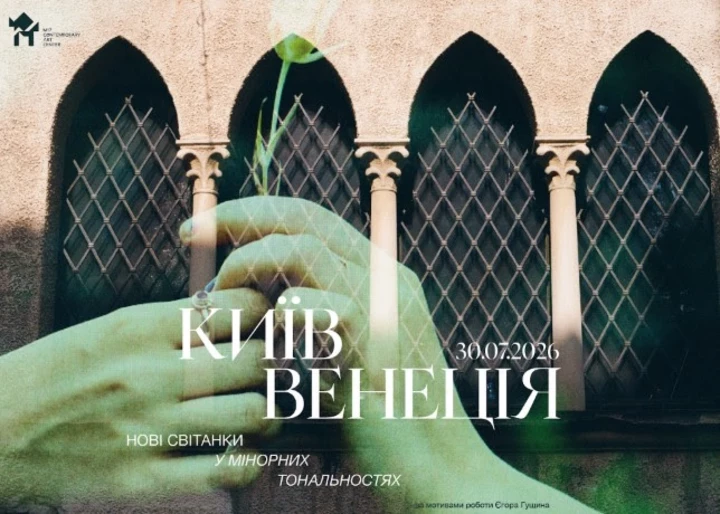
The exhibition project “Kyiv–Venice” symbolically builds a bridge between two important European waterways—the Dnipro River and the Venetian Lagoon. The exhibition addresses the theme of “In Minor Keys,” the theme of this year’s Venice Biennale, viewing it as an idea of hope and anticipation of dawn. Specifically for the exhibition, the team has developed a special transformative route with spaces for rest, contemplation, sound, words, and movement. “Our goal is to distract, to engage in dreaminess and enchantment, inviting visitors to slow down and allow new experiences to unfold,” says curator Nataliia Shpytkivska.
Among the project participants are Nelli Isupova, Anatoliy Hankevych, Tiberiy Silvashi, Ruslan Tremba, and others.
“Act: All Theatrical Performances Are Forbidden for Twenty Years”
Kudriavka, August 1
(@kudriavka.kyiv)
Veronika Yemelianova is an artist, director, and performer who explores themes of desire, archetypes, and the mechanisms of human behavior in her work. The new project “Act: All Theatrical Performances Are Forbidden for Twenty Years” at the Kudriavka space examines how desire transforms when its object becomes unattainable. At the core of the exhibition are three video performances, complemented by object-based works and installation elements.
Karina Synytsia Exhibition
Reopened The Naked Room Gallery, August
Synytsia Karina. (@sinica_karina_a)
August marks the official reopening of one of Kyiv’s most fashionable and significant galleries, The Naked Room, at its new location—2a Zolotovoritska Street. According to the team, this will be one of the few fully inclusive art spaces in Kyiv.
The gallery will open with an exhibition by Karina Synytsia, an artist originally from Sievierodonetsk, known for her monumental works, including frescoes and murals. Her art focuses on themes of war, displacement, and human interaction with space, interpreting her personal experiences within broader social and environmental contexts, as noted by the gallery.
“Between the Breaths of Walls, Doors Open Inward”
Voloshyn Gallery, until September 6
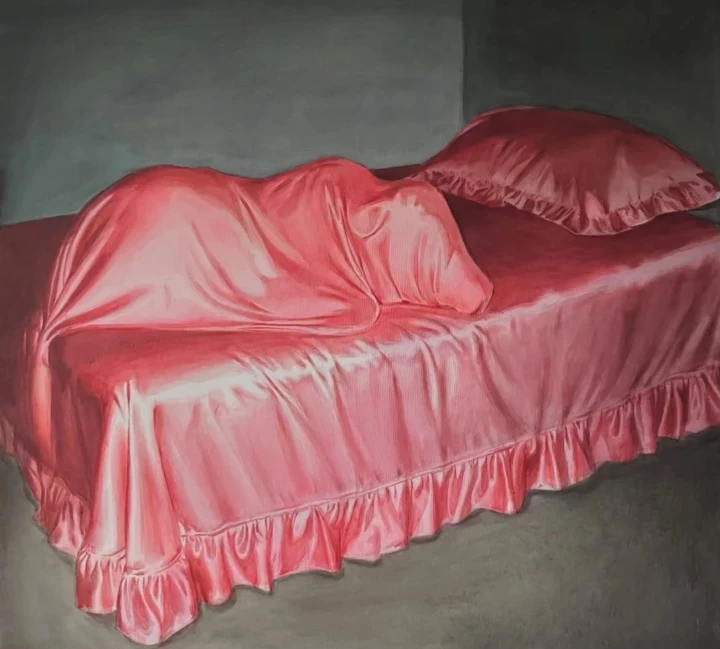
The exhibition brings together eight young artists whose works collectively explore the experience of existing in conditions of prolonged uncertainty. Working with installation, painting, ceramics, and video, Diana Demianenko, Nika Shumeyko, Maria Charkina, Artem Deyneka, Nikol Davydova, Anna Vekhnyk, Daryna Sviatun, and Oleh Savin address the domestic space both as a theme and a conceptual framework.
In this exhibition, the room is not a neutral or safe space. It is a place where familiar objects lose their function, where everyday gestures acquire a new, unsettling meaning, and the boundary between shelter and danger becomes indistinct. The presented works do not attempt to overcome this state—they exist within it, using irony, material displacement, and formal ambiguity as ways to remain present in an experience that defies simple definitions.
“The Known Unknown Bedzir”
Stedley Art Foundation, August 15
Stedley Art Foundation (@stedleyartfoundation)
The exhibition is dedicated to the work of Pavlo Bedzir, one of the most intriguing representatives of Transcarpathian painting of the 1960s. It features a series of graphic works from the 1960s–1970s, in which the artist combined modernist artistic practices with philosophical quests. Pavlo Bedzir formed his own artistic language at the intersection of global modernism and Transcarpathian cultural tradition, actively experimenting with techniques such as frottage, monotype, and his own printing methods, reinterpreting the experience of European avant-garde.