
Kalypso is one of the most poetic, tragic, and simultaneously cozy female figures in ancient Greek mythology. After the release of Christopher Nolan’s “Odyssey,” interest in her character has grown. We tell you about this heroine, who was played by the incomparable Charlize Theron in the film.
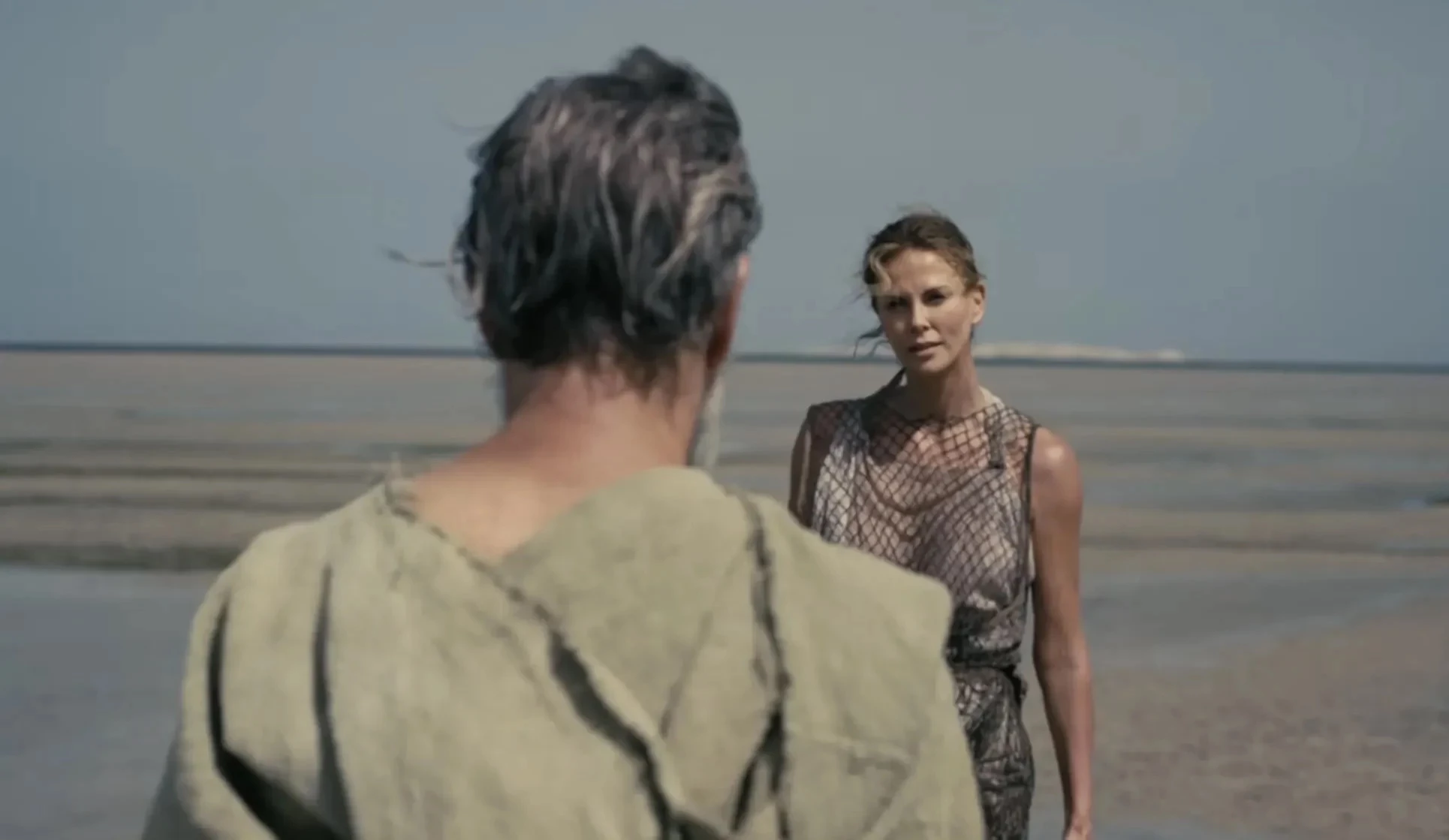 Charlize Theron as Calypso (“Odyssey”, 2026)
Calypso does not belong to the first-tier Olympian gods. She is a nymph, the daughter of the titan Atlas (according to other versions, an Oceanid). Her name comes from the Greek word kalypto, meaning “to hide,” “to conceal,” or “to cover with mystery,” which perfectly describes her essence and dwelling place. Calypso lived on the mythical isolated island of Ogygia—a true paradise, where time had no meaning, fragrant gardens bloomed, springs flowed, and the nymph herself wove at a golden loom and sang wondrous songs.
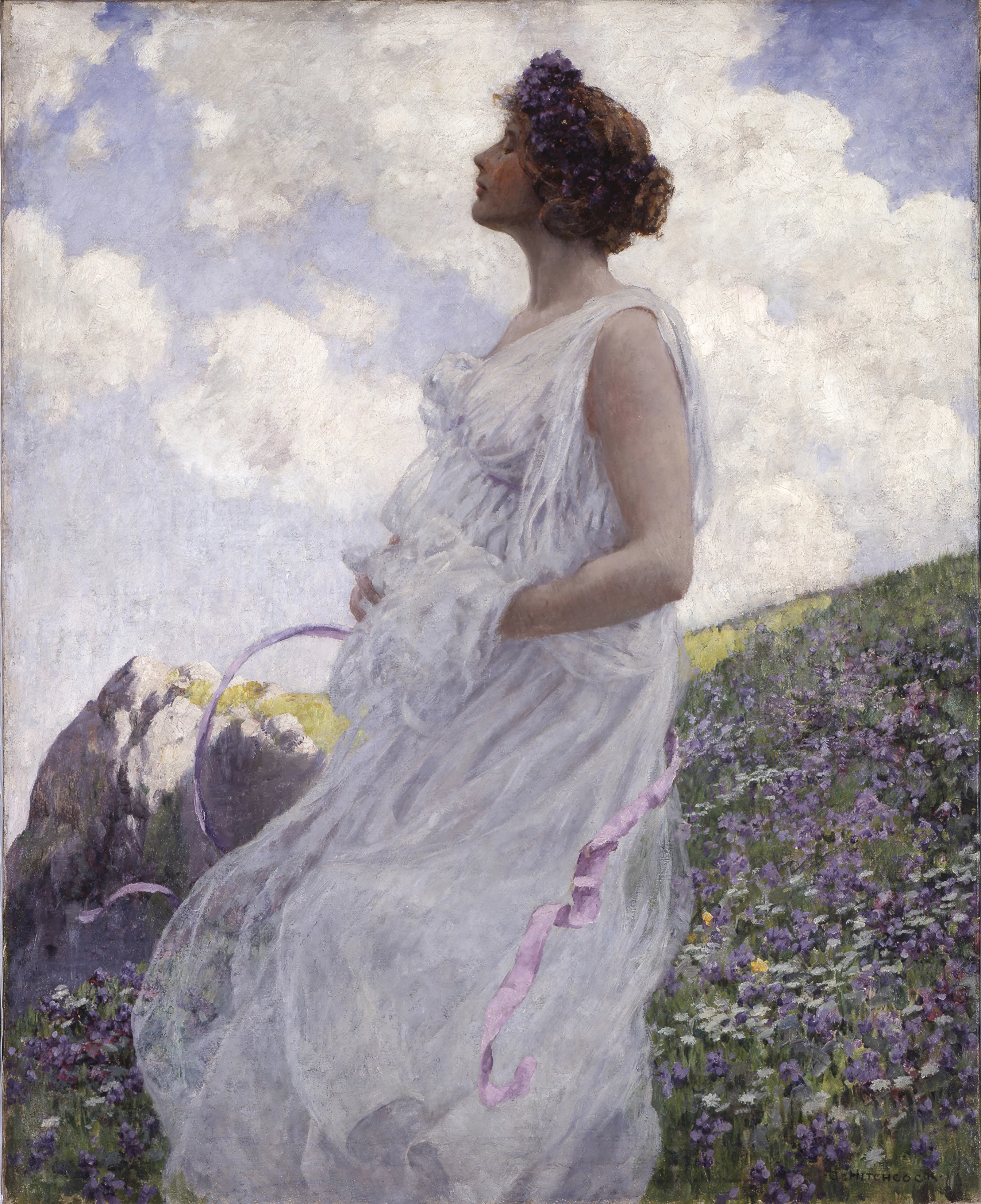 “Calypso” (1906), George Hitchcock
The most famous myth about her is described in Homer’s “Odyssey.” After a shipwreck, the exhausted Odysseus lands on her island. Calypso falls in love with him and keeps him for seven years. She offers him an unconditional gift that almost every mortal dreams of—immortality and eternal youth, if only he stays with her. Despite all the luxuries of the paradise island and the promise of eternal life, Odysseus sits by the seashore every day, weeping for his homeland Ithaca and his wife Penelope. Calypso is not evil—she simply loves sincerely and madly, but this love becomes a golden cage for the hero. Finally, Zeus sends Hermes with an order to release Odysseus, and Calypso, obedient to the will of the gods, helps him build a raft and lets her beloved go, remaining in complete solitude.
 Charlize Theron as Calypso (“Odyssey”, 2026)
In cinema, Calypso’s image has evolved from a classic Greek nymph to powerful archetypes of a mistress of the elements and femme fatales. One of her most striking cinematic portrayals is in the 1997 series “Odyssey.” Her role was played by Italian actress and model Vanessa Williams. Here, Calypso is depicted as a sensual temptress who genuinely cannot understand why Odysseus would refuse immortality and comfort for a “gray rock” (Ithaca) and a mortal woman who has aged over the years. It is a wonderful duel of two worldviews: the divine pursuit of stability and comfort versus the human yearning for home and destiny. In the “Pirates of the Caribbean” blockbuster series, the image of Calypso, on the contrary, is a highly adapted cinematic interpretation of the character in popular culture. Here, the creators combined the ancient Greek myth with Voodoo culture and Caribbean folklore. Calypso is shown as a wild, unpredictable, and powerful sea goddess, whom the pirate baron Davy Jones managed to imprison in a human body.
 Vanessa Williams as Calypso (“Odyssey”, 1997)
For artists and poets, Calypso, in turn, became the main symbol of the temptation of comfort, the tragedy of unrequited (or forcibly retained) love, and longing for one’s homeland. In classical painting, themes with Calypso are divided into two main motifs: the idyll of a paradisiacal life (during Odysseus’s stay) and the drama of loneliness (after his departure). The most famous painting on this theme is the work “Odysseus and Calypso” (1883) by the Swiss artist Arnold Böcklin. Also known in European painting are canvases by Angelica Kauffman and Maurice Denis, dedicated to this myth from the “Odyssey,” where the nymph unsuccessfully offers the hero love and immortality.
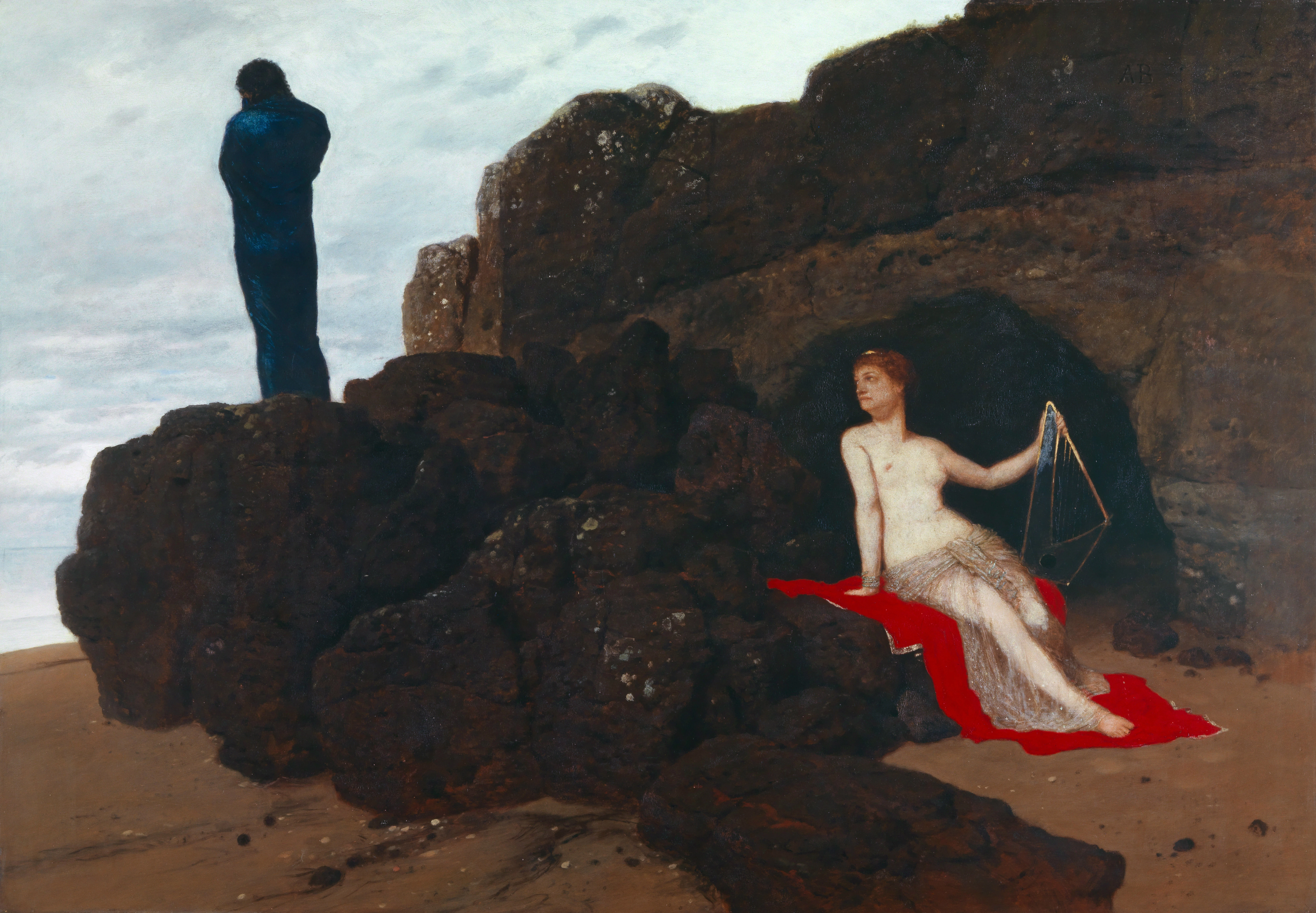 “Odysseus and Calypso” (1883)